
Every young person in Kentucky deserves the opportunity to reach their full potential, and education is key to long-term success. Students with foster care experience bring unique strengths and perspectives to our classrooms; they also face systemic hurdles that can make the climb toward graduation more difficult. Frequent moves and significant trauma can contribute to poorer educational outcomes and leave many without the skills needed to thrive later in life.
In Kentucky, youth experience an average of three placements per removal episode, and these disruptions can make it difficult to stay on track academically. At the same time, these experiences can continue to impact learning and engagement into adulthood, where mental health challenges and limited supports can make it difficult to access and succeed in postsecondary education, even in a state like Kentucky that offers a Tuition Waiver. The goal of this report is to identify these barriers and their impacts to highlight what is possible and build a more supportive educational system for our most vulnerable students.
For the best experience, please view this page on a desktop browser.
Attendance
Youth in foster care experience significantly higher rates of chronic absenteeism and homelessness than their peers. Disruptions in placement and schooling can lead to missed days, gaps in enrollment, and inconsistent attendance. These challenges make it harder for students to keep pace with instruction and increase the likelihood that they fall behind or are required to repeat a grade.
Chronic Absenteeism Among K-12 Students in Kentucky
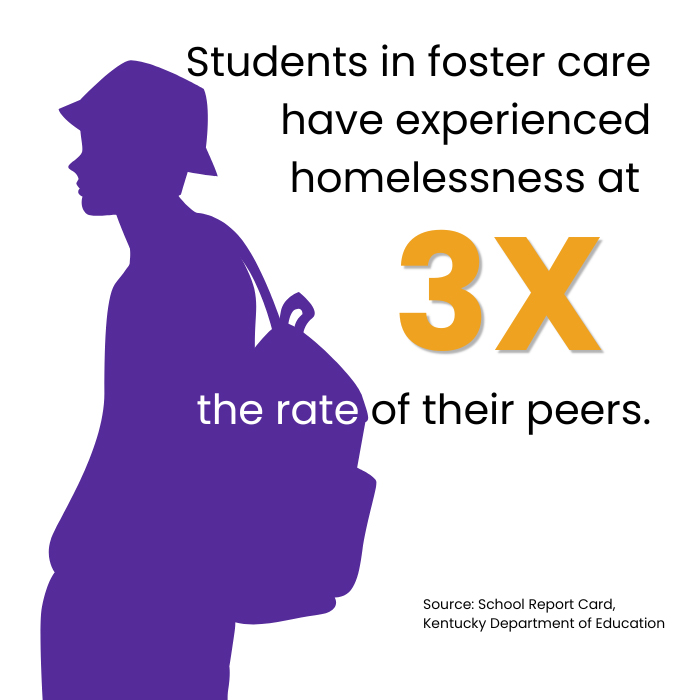
Disruptions in placement and schooling can lead to missed days, gaps in enrollment, and inconsistent attendance.
Chronic Absenteeism Among K-12 Students in Kentucky
Disruptions in placement and schooling can lead to missed days, gaps in enrollment, and inconsistent attendance.
Education Outcomes
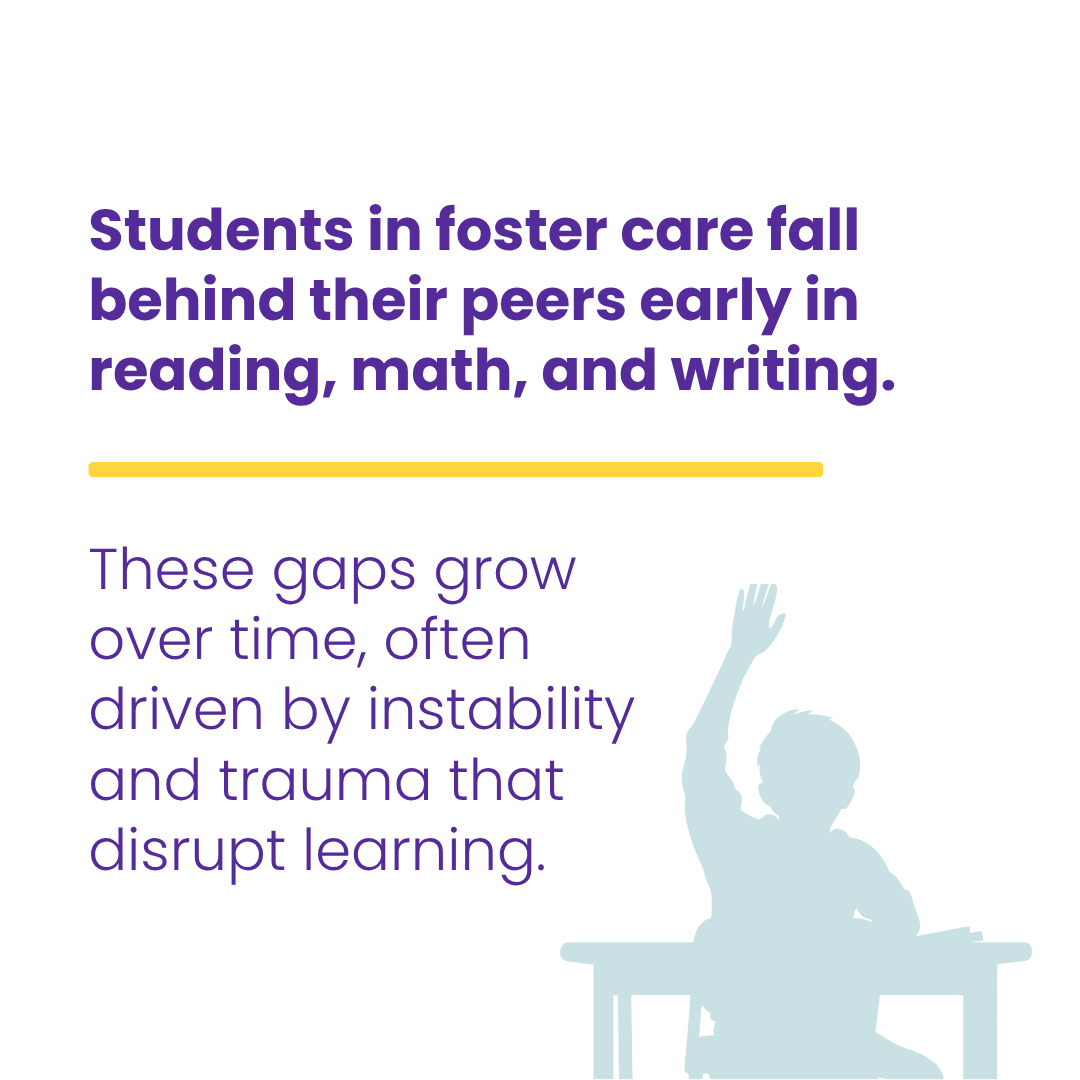
Students in foster care perform below their peers on academic assessments in foundational subjects, such as reading, math, and on-demand writing. These gaps appear early and widen over time, indicating that many students are not meeting grade-level expectations, in part due to the instability and trauma these students experience.
School Assessment Data – Elementary, Middle, and High School
Students Proficient in Subject Area by Grade Levels
School Assessment Data – Elementary, Middle, and High School
Students Proficient in Subject Area by Grade Levels
Students Proficient in Select Subject Area by DCBS Region
Students Proficient in Select Subject Area by DCBS Region
8th Graders Proficient or Distinguished in Reading
11th Graders Proficient or Distinguished in Writing
Graduation, College & Career Readiness
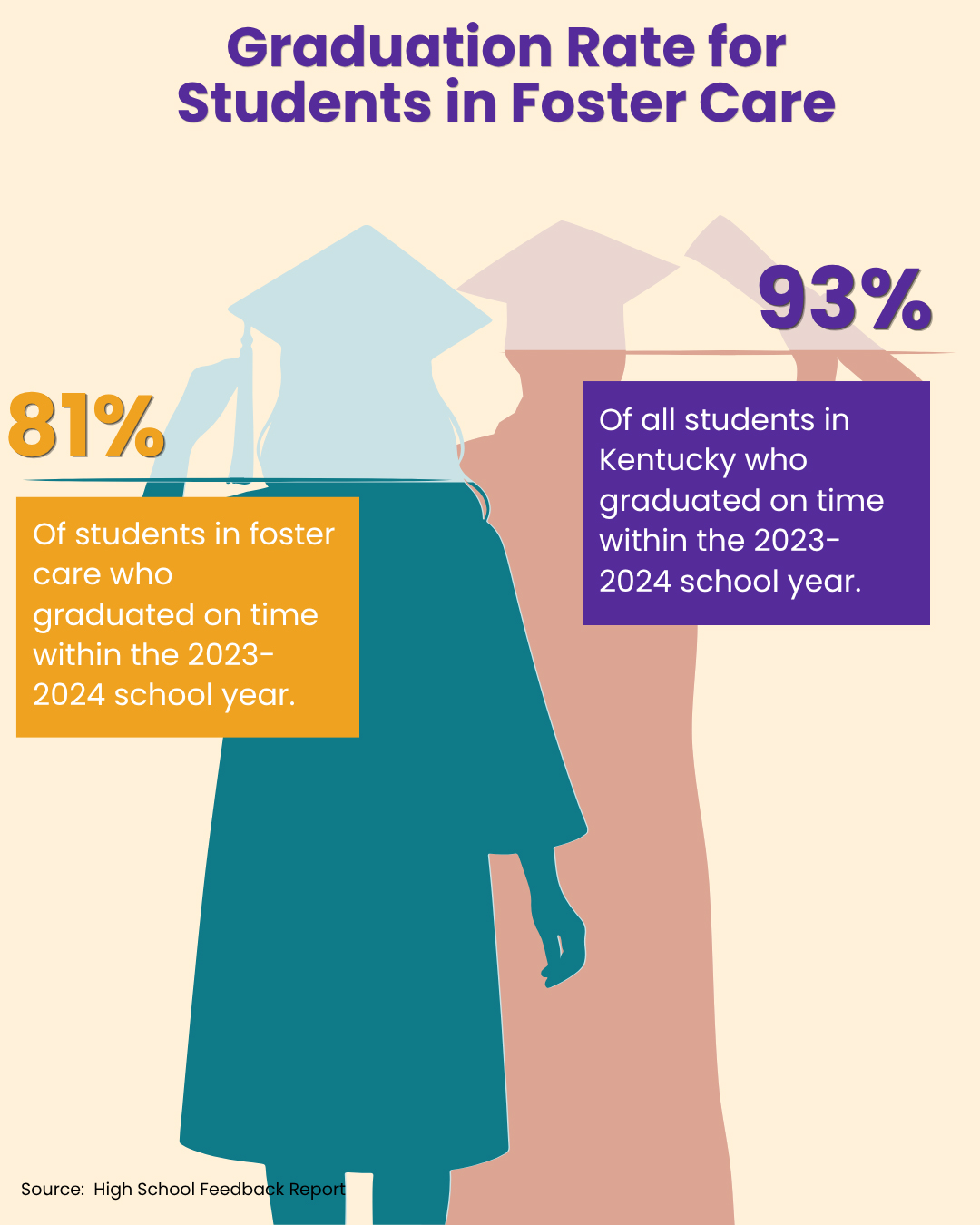
Due in part to challenges with attendance and foundational skills, students in foster care graduate at lower rates than their peers and are less likely to demonstrate college and career readiness. They are less likely to transition to postsecondary education after graduation and less likely to complete career and technical education pathways while in high school, reducing opportunities to build workforce-ready skills and earn industry-recognized credentials.
Career and Technical Education Enrollment and Completion
Career and Technical Education Enrollment and Completion

Students who are Postsecondary Ready
ACT Score Average
Average Junior Year ACT Score
ACT Score Average
Average Junior Year ACT Score
Tuition Waiver
Kentucky’s Tuition Waiver for Foster and Adopted Children allows youth currently in foster care, who have aged out, or who were adopted from care to attend Kentucky’s community and technical colleges and public universities without paying tuition or mandatory fees. The utilization of this waiver has steadily increased over the past decade; however, graduation rates at both institution types remain low, even among those using the waiver.
Enrollment at an In-State College One Year Post Graduation
First Year College GPA of In-state, Kentucky Students
Enrollment at an In-State College One Year Post Graduation
First Year College GPA of In-state, Kentucky Students
Enrollment and Graduation rate of first-time, full-time students utilizing tuition waivers by year students started university
Enrollment and Graduation rate of first-time, full-time students utilizing tuition waivers by year students started university
Innovative Programs
With the right supports in place, young people with foster care experience can excel in school, thrive in adulthood, and accomplish their dreams. Across Kentucky, programs are helping young people with foster care experience access the academic and concrete supports they need to succeed in school and prepare for adulthood.
- KCTCS Foster Youth Success Coaches help current and former foster youth navigate the college process from enrollment to graduation.
- DCBS’s Earn & Learn allows eligible youth to earn wages while pursuing a short-term KCTCS certificate in a high-demand field.
- The Foster Care Council offers an individualized tutoring program that connects foster children who are testing below grade level with a certified teacher for three hours per week at the child’s current placement.
- Family Scholar House supports young people who have a foster care experience in pursuing education and self-sufficiency through coaching, housing supports, financial assistance, career pathways, and regular check-ins.

With the right supports in place, young people with foster care experience can excel in school, thrive in adulthood, and accomplish their dreams. Across Kentucky, programs are helping young people with foster care experience access the academic and concrete supports they need to succeed in school and prepare for adulthood.
- KCTCS Foster Youth Success Coaches help current and former foster youth navigate the college process from enrollment to graduation.
- DCBS’s Earn & Learn allows eligible youth to earn wages while pursuing a short-term KCTCS certificate in a high-demand field.
- The Foster Care Council offers an individualized tutoring program that connects foster children who are testing below grade level with a certified teacher for three hours per week at the child’s current placement.
- Family Scholar House supports young people who have a foster care experience in pursuing education and self-sufficiency through coaching, housing supports, financial assistance, career pathways, and regular check-ins.

Policy Solutions
Effective policy must be rooted in the expertise of those who have navigated the system firsthand. Centering the lived experiences of foster youth ensures that these solutions address real-world barriers and foster true educational equity.
Increase Educational Stability
Protect Progress in K-12 Education
Support Completion of Postsecondary Education
- Track and report the number of school changes for youth in care, the status of school enrollment, and the steps taken to maintain their school of origin.
- Standardize and enforce clear, consistent processes for transportation of youth in foster care to their school of origin, including how transportation is arranged, communicated, and reimbursed.
- Strengthen foster care points of contact at the district level and identify school-level contacts with clearly defined roles, responsibilities, and coordination expectations.
- Require full and partial credit transfer when students in foster care change schools due to placement changes so they are not placed behind or into lower-level coursework.
- Require individualized academic planning with targeted supports, such as tutoring and credit recovery, to keep students on track for graduation and postsecondary readiness.
- Strengthen and standardize postsecondary transition planning for youth aging out of care, including support with FAFSA, admissions, and enrollment, and ensure coordination across available funding and support programs.
- Designate a campus point of contact to support students utilizing the Tuition Waiver, including clearly defined roles and responsibilities for coordinating financial aid, academic support, and student services.
- Expand and ensure consistent access to supports beyond the Tuition Waiver and Chafee Educational Training Vouchers (ETV), including housing, meal plans, books, and campus-based services that support student success.
Increase Educational Stability
- Track and report the number of school changes for youth in care, the status of school enrollment, and the steps taken to maintain their school of origin.
- Standardize and enforce clear, consistent processes for transportation of youth in foster care to their school of origin, including how transportation is arranged, communicated, and reimbursed.
- Strengthen foster care points of contact at the district level and identify school-level contacts with clearly defined roles, responsibilities, and coordination expectations.
Protect Progress in K-12 Education
- Require full and partial credit transfer when students in foster care change schools due to placement changes so they are not placed behind or into lower-level coursework.
- Require individualized academic planning with targeted supports, such as tutoring and credit recovery, to keep students on track for graduation and postsecondary readiness.
Support Completion of Postsecondary Education
- Strengthen and standardize postsecondary transition planning for youth aging out of care, including support with FAFSA, admissions, and enrollment, and ensure coordination across available funding and support programs.
- Designate a campus point of contact to support students utilizing the Tuition Waiver, including clearly defined roles and responsibilities for coordinating financial aid, academic support, and student services.
- Expand and ensure consistent access to supports beyond the Tuition Waiver and Chafee Educational Training Vouchers (ETV), including housing, meal plans, books, and campus-based services that support student success.