Help amplify this story!
Breaking the Cycle: A Future of Possibility
By: Tatum Abel
Growing up in Kentucky’s foster care system, I learned early on that safety was often something defined by a case file or a courtroom. As an alumna, my perspective on Child Abuse Prevention Month is shaped by a deep understanding of what happens when the safety nets fail. But today, as a mother of one with another little one on the way, that perspective has shifted from a place of survival to one of fierce, intentional advocacy.
This April, Child Abuse America has chosen “Pinwheels of Possibility” as the theme for Child Abuse Prevention Month. To me, those pinwheels aren’t just symbols of a happy childhood, they represent the constant, turning effort required from all of us to ensure every child across the Commonwealth is seen, heard, and protected.
“But today, as a mother of one with another little one on the way, that perspective has shifted from a place of survival to one of fierce, intentional advocacy.”
What Foster Care Taught Me About True Prevention
Being a foster care alumna means carrying a unique dual-lens. I know the weight of a system that steps in after a crisis has occurred. While that intervention is vital, true prevention happens much earlier. It happens when we support families before they reach a breaking point. My journey through the system taught me that prevention isn’t just about identifying “bad” situations, it’s about building “good” ones. It’s about economic security by ensuring parents can provide basic needs without the crushing weight of poverty. It’s also about community connection and policy change like pushing for legislation like paid family leave, which allows parents to bond with and care for their children during those critical first months.
“I know the weight of a system that steps in after a crisis has occurred. While that intervention is vital, true prevention happens much earlier.”
Building a Culture of Support for Families
Preparing to welcome my second child has only deepened my commitment to this work. I look at my children and see the possibility we talk about. Every child deserves to grow up in a home where their only job is to be a kid. As a mother, I realize that prevention also means normalizing the act of asking for help. We need a Kentucky where a parent reaching out for support is met with resources like home visiting programs or child care assistance, rather than judgment.
How You Can Join the Movement?
Child abuse prevention is not a task for a single agency; it is a shared responsibility for every Kentuckian. Here is how you can help turn the pinwheels of possibility this month:
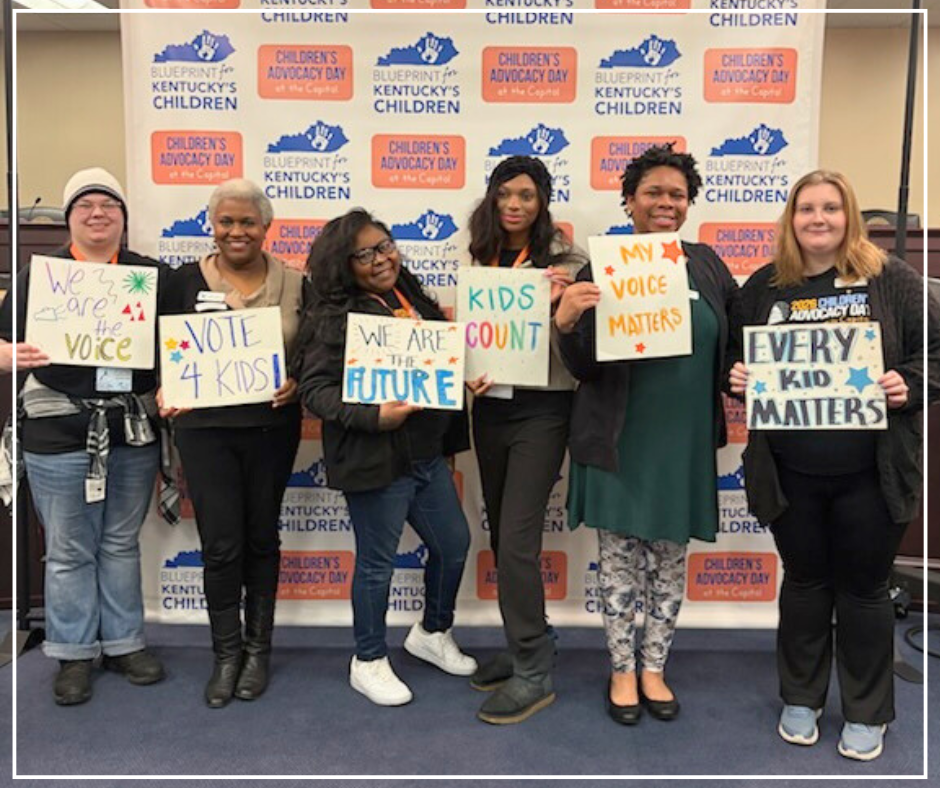
- Advocate for the Blueprint: Support the Blueprint for Kentucky’s Children, which focuses on policies that keep kids safe and families stable.
- Wear Blue: Show your solidarity by participating in Wear Blue Day. It’s a simple visual reminder that we are a community committed to our kids.
- Support Kinship Care: Many of our children are raised by grandparents or other relatives. Advocating for resources for kinship caregivers is a direct way to prevent further trauma and keep families connected.
- Learn the Signs: Knowledge is our best tool. The Kosair for Kids Face It Movement provides free resources like the Ten-4-FACESp tool to help identify signs of abuse in young children, along with guides on safe medication storage, body safety, safe sleepovers, and online safety.
- Empower Lived Experts with True Up: Advocacy doesn’t just end when a foster kid leaves the system, it continues as they transition to adulthood and the rest of their lives. Support True Up by mentoring or providing resources to help foster alumni gain the life skills they need for self-sufficiency. Empowering and listening to these future leaders is a direct way to break the cycle in future generations.
My past does not define me, but it does drive me. It drives me to ensure that the variable paths I walked as a youth are replaced by stable, supported futures for my children and yours. Let’s commit to making Kentucky a place where every child’s potential is a promise, not just a possibility.